
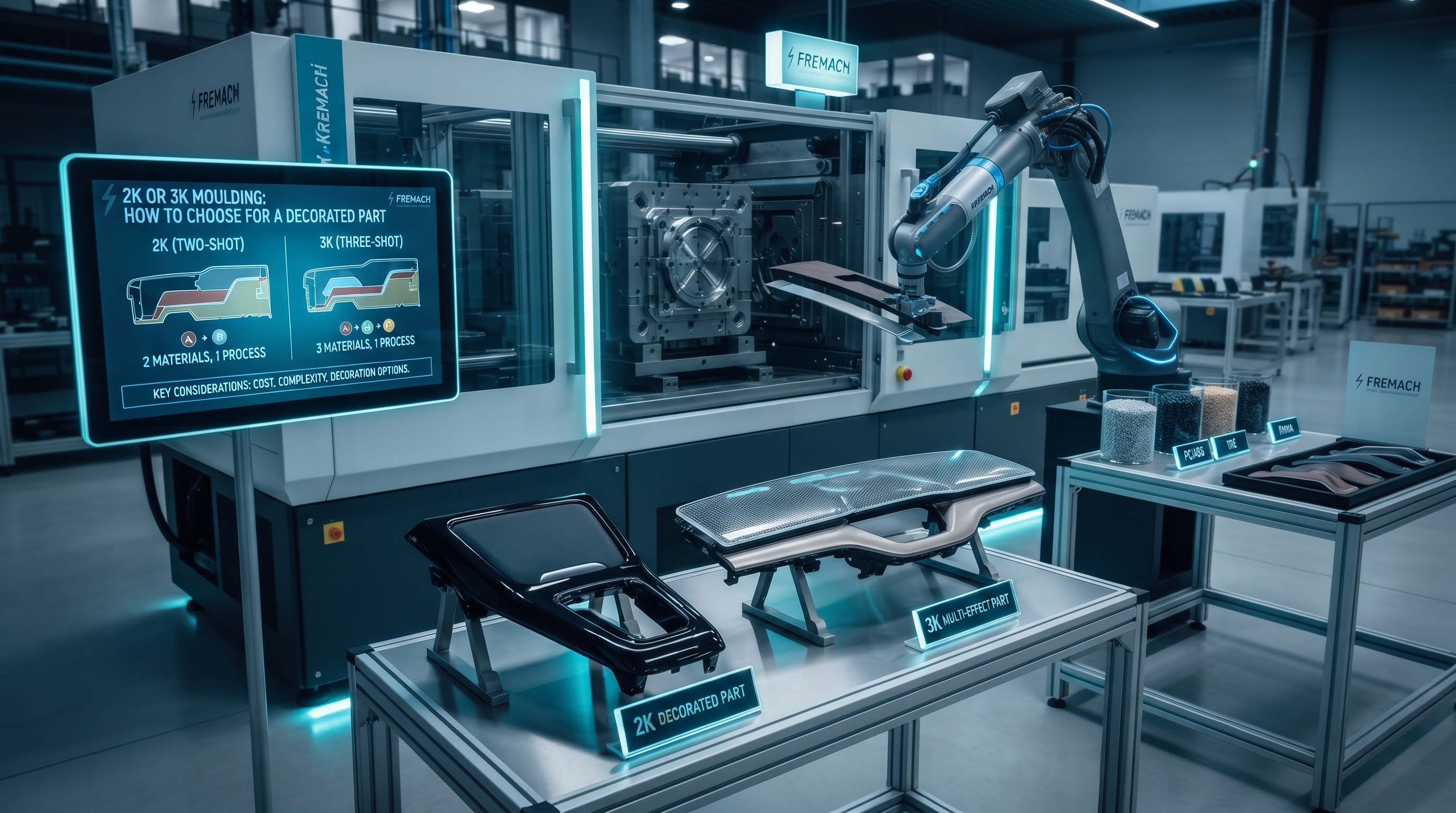
2K or 3K moulding: how to choose for a decorated part
When a part has to combine a rigid structure, a soft-touch surface, a translucent window and sometimes an integrated function, the first decision is not which polymer to use. It is how many shots to run.
The real question is function per cycle
Multi-component moulding (injecting two or three polymers in sequence inside one tool) exists to collapse an assembly into a single moulding cycle. The payoff is not novelty: it is a molecular bond between layers, the elimination of the cumulative tolerance buildup that creeps in when you join separate pieces, and colour or texture added without a secondary operation.
2K means two materials: usually a rigid substrate carrying a soft-touch or sealing layer, or an opaque frame around a translucent lens. The tool runs four stages in one cycle (inject the substrate, cool, index and inject the second material over it, then cool and eject). Moderate-complexity two-shot tooling sits in the region of tens of thousands of euros, and because no manual handling happens between shots, the per-part cost stays low and the process scales cleanly to high volume.
3K (from the German *drei Komponenten*, three components) adds a third injection. It earns its place only when a part genuinely needs three distinct materials: three hardness levels, or a structural frame plus a transparent optical layer plus a coloured function zone.
What the third shot really costs
That third shot is not free. 3K tools demand rotating cores, cavity-to-core alignment often held under 5 microns, and careful thermal management because three polymers can have very different melt temperatures. For optical layers, surface roughness has to reach Ra of 0.2 µm or better. The upfront tooling cost rises accordingly. So the rule we apply is simple: do not pay for a third shot unless the third material delivers a function you cannot get by decorating or by combining two materials. If the "third element" is really just a colour or a graphic, in-mould decoration or printing usually delivers it at lower tooling cost.
Material compatibility decides it before the tool is cut
This is where most projects quietly fail. Across the industry, roughly 70% of two-shot bonding failures trace back to material selection and only 30% to the process. A reliable chemical bond needs similar polarity, compatible chemistry and overlapping melt temperatures: we keep the melt-temperature gap between the two polymers under about 40°C. Proven pairs do the heavy lifting (ABS with styrenic TPE for grips, PC with TPE for covers, polyamide with polyamide-based TPE for connectors, PP with olefinic TPV for seals). Others fight you: acetal (POM) rejects most TPEs, and polypropylene will not bond over engineering thermoplastics such as ABS, PC or PA. Get this wrong and it shows up as delamination, warpage or a blemished bond line.
Geometry matters as much as chemistry. We design the soft layer at least 1.6 mm thick, use abrupt transitions with positive shutoffs, vent generously, and keep the substrate clean and preheated so the second shot wets and keys properly. For any moving interface (snap-fit clips, contact surfaces), we steer toward wear-resistant polymers rather than a soft overmould that will abrade.
Where decoration and integration change the answer
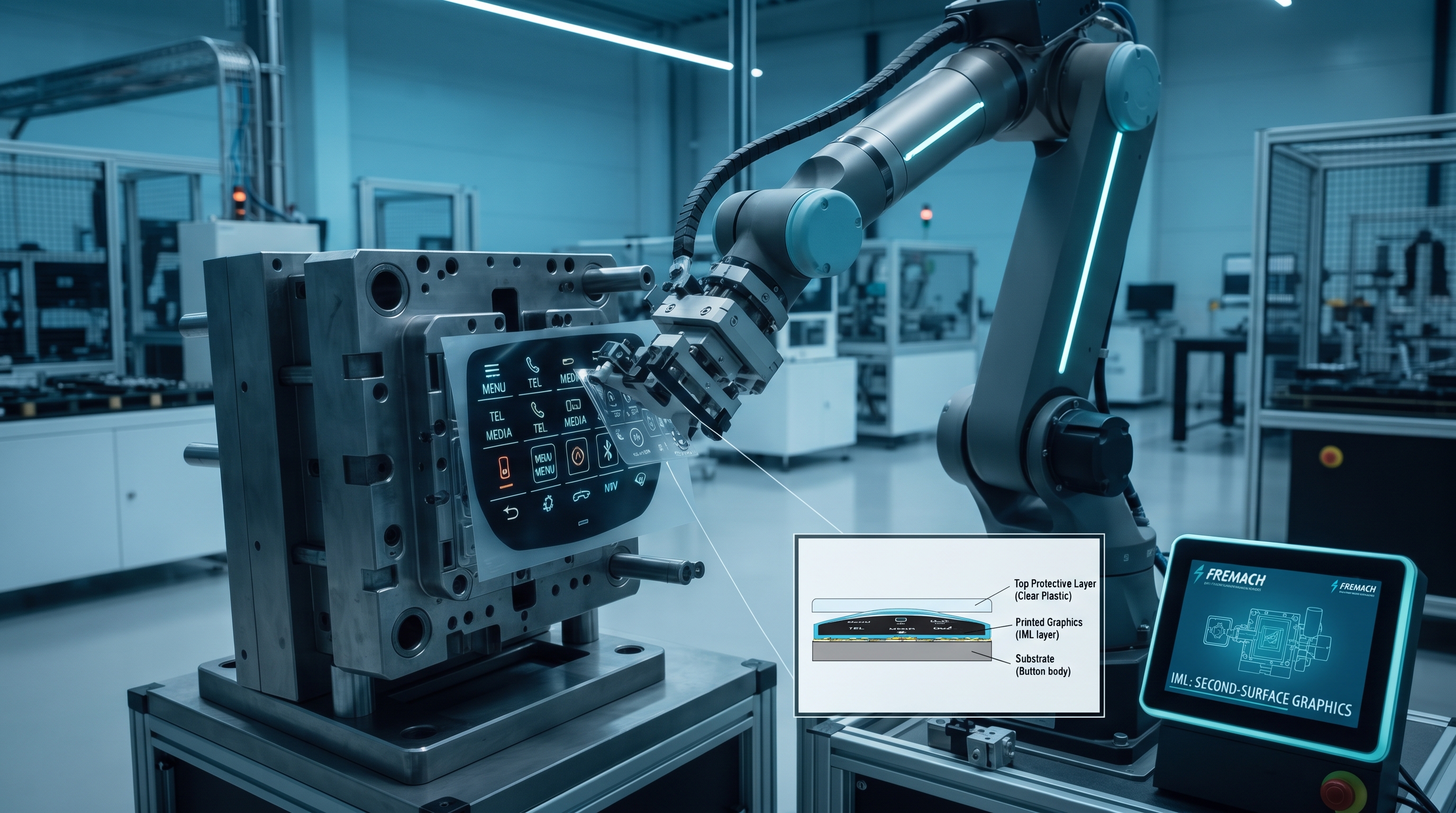
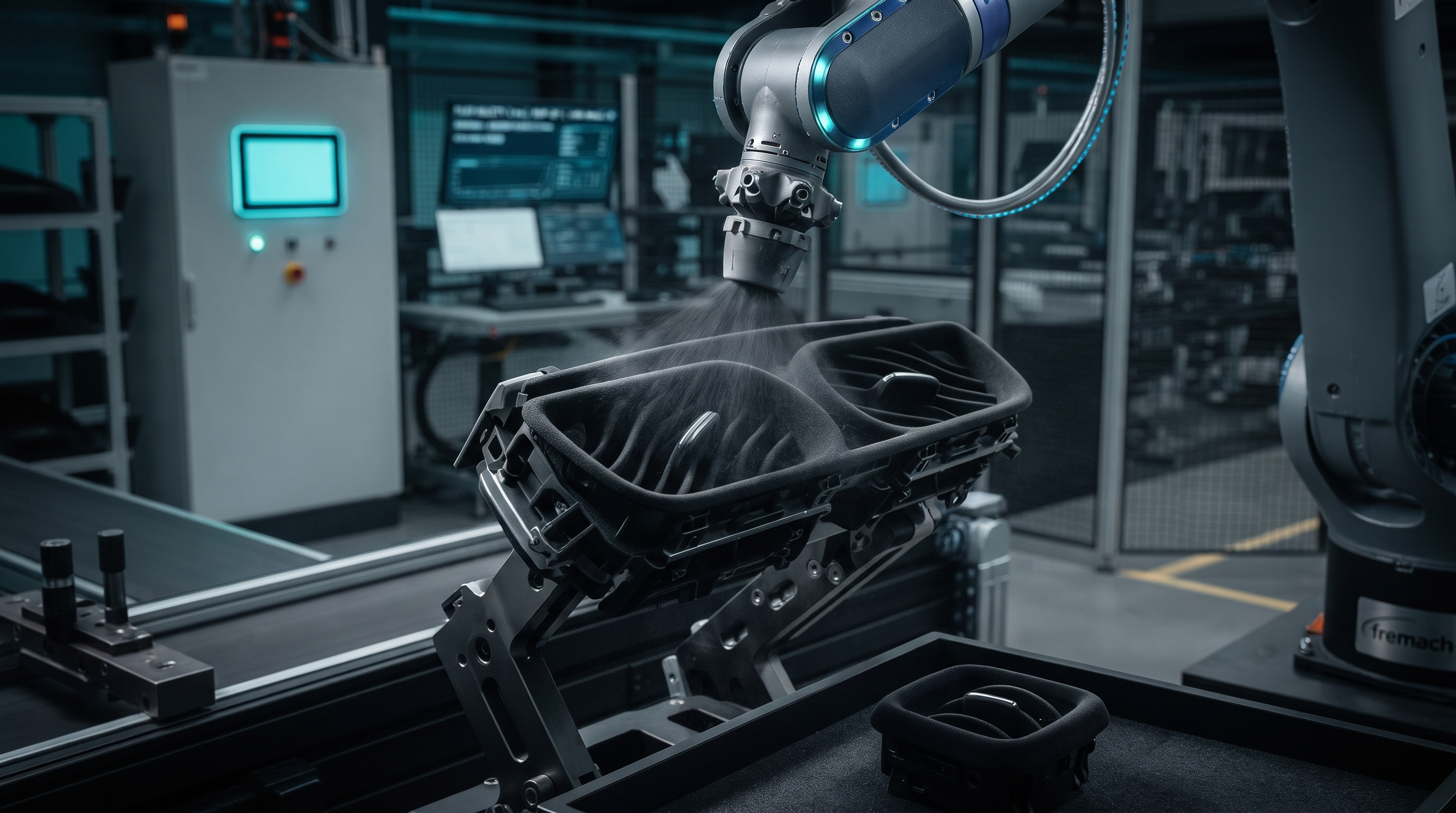
Shot count is only half the decision. A decorated part reaches its finished surface one of two ways: by moulding the colour in, or by decorating a moulded substrate. In-mould decoration transfers a finish from a carrier film during back injection, while painting, printing, thermoformed overlays and flocking each suit different textures, depths and durability targets. Multi-process lines now fold forming, injection and a protective coating into a single sequence: a soft-touch console produced by Hyundai cut cycle time from roughly two hours to two minutes by integrating operations that used to run separately. The same logic lets us place invisible functions (heating elements, sensors) and electronics behind a decorated surface.
That is the conversation we have with engineers: the question is never "2K or 3K" in isolation, but which combination of shot count, material pairing, decoration method and integrated electronics delivers the part at the volume and durability you need. At Fremach we run multi-component (2K and 3K) moulding alongside surface decoration and electronics integration under one roof, so these trade-offs get resolved together rather than discovered on the assembly line. If you are developing a decorated or integrated component, bring your part or your drawing to our engineers and we will map the options with you.
Talk to our team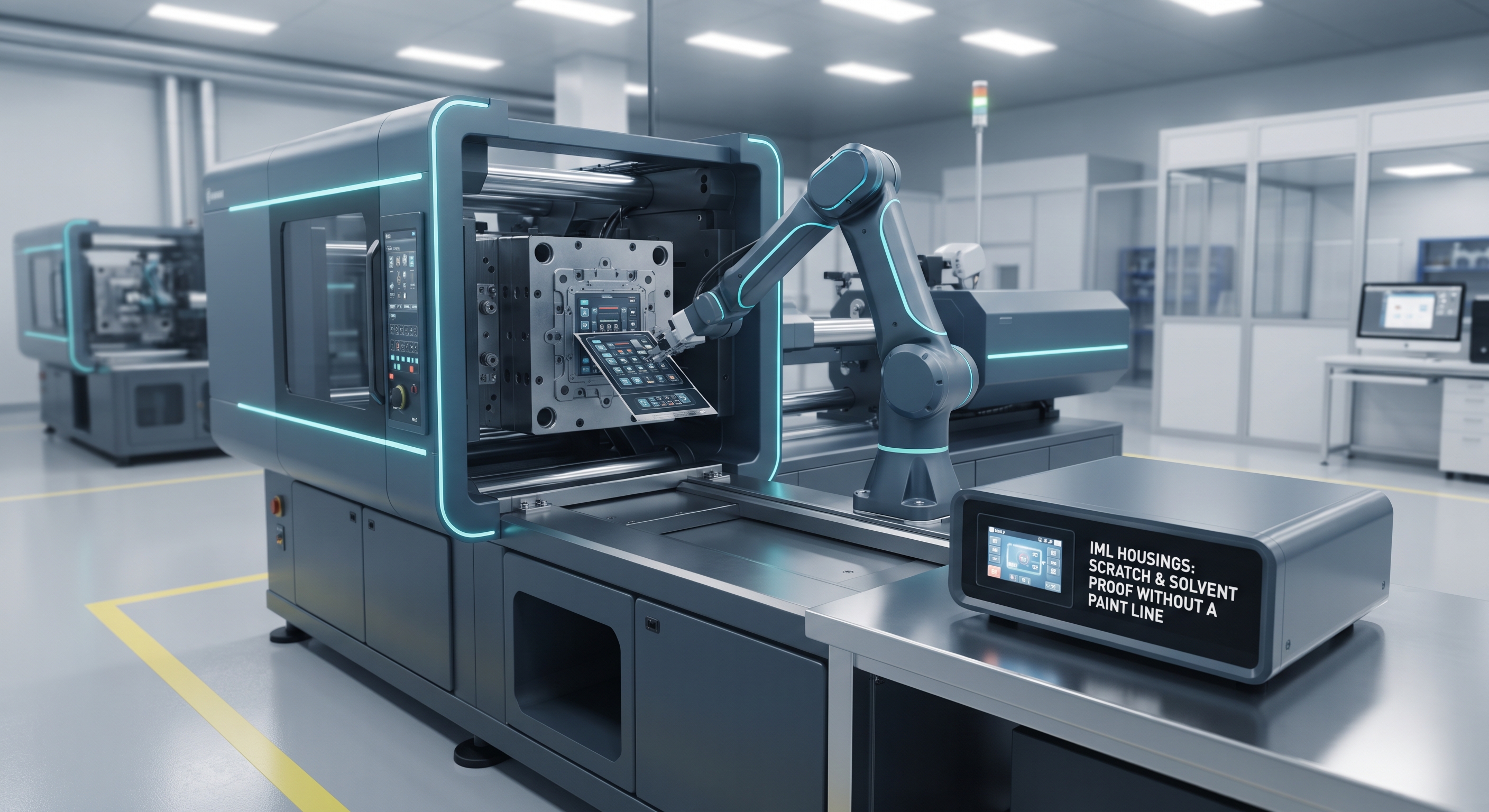
Stay in the loop.
Subscribe to our newsletter for new articles, project stories and technology insights. No spam, unsubscribe anytime.
Want to discuss a project?
Bring us a drawing, a target volume, or just a challenge. Our engineers review every brief and respond within two business days.